February 7, 2026
New York adopts medical aid in dying with new safeguards
Joshua Villanueva reports for The Jurist
New York Governor Kathy Hochul signed the “Medical Aid in Dying Act” on Friday, making New York the latest state to authorize physician-assisted dying for certain terminally ill patients.
The law represents a major policy reversal in a state where the highest court had previously emphasized that assisted suicide remained unlawful absent legislative change.
The new statute, S.138/A.136, permits an “aid-in-dying” prescription for eligible adult residents who are terminally ill and expected to die within six months, subject to layered procedural safeguards the governor negotiated with the New York State Legislature.
Among the added “guardrails” highlighted by the governor’s office are:
(1) a mandatory five-day waiting period between when the prescription is written and when it can be filled
(2) a requirement that the patient’s oral request be audio- or video-recorded
(3) a mandatory mental health evaluation by a psychologist or psychiatrist
(4) disqualification of anyone who stands to benefit financially from the patient’s death from serving as a witness or interpreter
(5) an in-person initial physician evaluation, and
(6) explicit opt-out provisions for religiously oriented hospice providers.
In 2017, the New York Court of Appeals rejected a constitutional challenge by terminally ill plaintiffs seeking physician-assisted suicide, holding that the New York Constitution’s due process clause did not recognize a fundamental right to physician-assisted suicide and that the existing prohibition satisfied rational-basis review.
The US Supreme Court declined to recognize a federal substantive due process right to assisted suicide in 1997, leaving states room to legalize or prohibit the practice through legislation.
New York’s 2026 enactment is therefore best understood as a deliberate exercise of state police power in the health-and-safety domain, not as judicially compelled reform.
New York long criminalized aiding another person’s suicide attempt.
The new act functions as a narrow authorization channel that, if followed, should serve as a shield against prosecution for clinicians and others involved, while preserving prosecutorial and licensing authority over conduct that deviates from statutory requirements or involves coercion, fraud, or abuse.
New York becomes the 13th state to authorize some form of physician-assisted dying.
Oregon pioneered the approach by legalizing medical aid in dying in 1994, and Illinois most recently joined the list after signing its law in December.
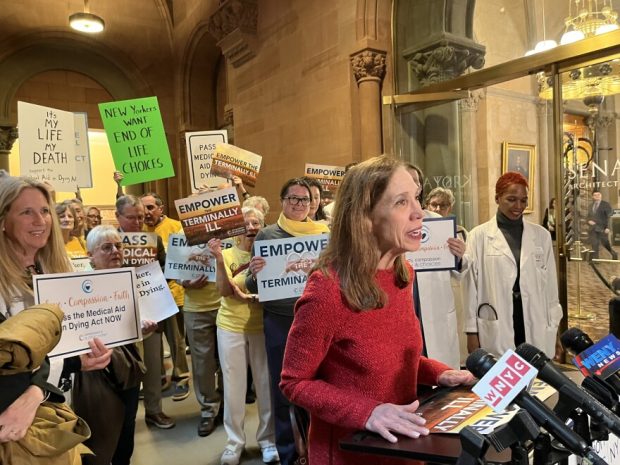
Advocacy organizations praised the enactment and have indicated they will focus on education and implementation over the next six months.
Catholic leadership has framed the law as abandonment of vulnerable people, emphasizing concerns about coercion, disability rights, and the medical profession’s role.
That critique is poised to continue under Ronald Hicks, newly installed as Archbishop of New York on the same day the bill was signed.
His predecessor, Timothy Dolan, publicly condemned the legislation in December after the governor announced she would sign it.