

Exit Members have often used their experiences to speak out on voluntary euthanasia, assisted suicide & their human right to determine their own life and death.
These are their stories
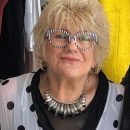
Cath Ringwood
Cath died in early July 2022
Cath Ringwood died last week at the age of 72, after living many years with the multiple diagnoses of leukemia and breast cancer. We will miss her greatly.
 Read
Read
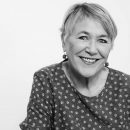
Annah Faulkner
Annah died in March 2022
Annah Faulkner died at home in Tasmania. An award-winning writer, her suicide note is poignant, thought-provoking, life-affirming and tragic.
 Read
Read
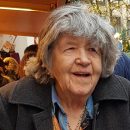
Laura Henkel
Laura died 19 December 2019
Laura Henkel had just turned 90 when she died in Switzerland. Her life and death is the subject of the documentary Laura’s Choice on Australian ABC TV.
 Read
Read
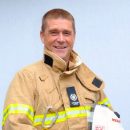
Troy Thornton
Troy died 22 February 2019
Troy Thornton was 54 years old when he died in Switzerland. He had multiple system atrophy.
 Read
Read
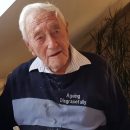
Professor David Goodall
David died 10 May 2018
On the eve of his 104th birthday, Exit’s oldest Member, Professor David Goodall, announced his intention to go to Switzerland for an assisted death.
 Read
Read
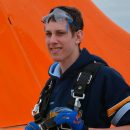
Rhys Habermann
Rhys died 11 January 2017
The story of Rhys Habermann concerns a young man diagnosed with Ewing’s Sarcoma cancer. In late 2015, Rhys would become the youngest person that Exit has ever permitted to subscribe to the Peaceful Pill eHandbook.
 Read
Read
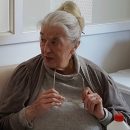
Professor Avril Henry
Avril died 21 April 2016
Emeritus Professor Avril Henry was 81 years old when she died at her home in Brampford Speke in Devon. She died of a Nembutal overdose.
 Read
Read
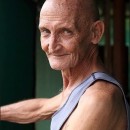
Martin Burgess
Martin died 23 October 2014
Former VEP Candidate for the NT, Martin Burgess, was a gentle, giving man who was ever-ready with a ‘darling girl’ or ‘mate’ greeting.
 Read
Read
Max Bromson
Max died 27 July 2014
Former Voluntary Euthanasia Candidate for Sth Australia, Max Bromson, finally lost his battle with carcenoid cancer drinking Nembutal he obtained overseas.
 Read
Read
Marie Fleming
Marie died 20 December 2013
In December 2012 Ms Fleming brought her fight to challenge the ban on assisted suicide to the High Court. She had wanted her partner Tom Curran to be able to assist her death without fear of prosecution.
 Read
Read
Angy Belecciu and Don & Iris Flounders
Angy died 2009. Don & Iris died 2011.
Don, diagnosed with mesothelioma, wanted to obtain Nembutal overseas. Don had little money but Angy, terminally ill with breast cancer and unable to travel, offered to help.
 Read
Read
Christian Rossiter
Christian died September 2009
Chris’ story made news around the world when his nursing home in Perth sought declaratory relief in the Supreme Court resulting in the right for Chris to stop food and fluids, should he so desire.
 Read
Read
Angelique Flowers
Angelique died August 2008
Angelique was diagnosed with the debilitating Crohn’s disease at 15, and one week before her 31st birthday was told she had colon cancer. She was given only months to live.
 Read
Read
Caren Jenning
Caren died September 2008
Caren was 74 when she was convicted of manslaughter of her friend, former Qantas pilot Graeme Wylie. Seriously ill with breast cancer herself Caren drank a bottle of Nembutal she had smuggled into Australia.
 Read
Read
Dr John Elliot
John died 25 January 2007
On 25 January 2007, a month short of his 80th birthday, Sydney doctor John Elliott became the fifth Australian to travel to the Dignitas service in Switzerland.
 Read
Read
Steve Guest
Steve died July 2005
Suffering from oesophageal cancer Steve came to public attention when he made a phone call to 774 ABC radio Melbourne pleading to be allowed a magic bullet so that he could end his suffering.
 Read
Read
Nancy Crick
Nancy died 2002
Nancy Crick died surrounded by twenty-one family and friends. In the last years of her life, Nancy suffered from bowel cancer and had undergone three operations in which most of her bowel had been removed.
 Read
Read
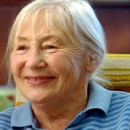
Lisette Nigot
Lisette died 2002
Lisette made contact with Exit at a workshop. She talked to Philip and said that she planned to end her life before she turned 80. She explained that she was not sick and that illness played no part in her decision.
 Read
Read
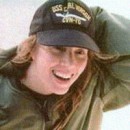
Sandy Williamson
Sandy died 2002
Sandy Williamson was diagnosed with Motor Neurone Disease (MND) on 11 September 2001. Nine months later, Sandy took her own life with an overdose of the barbiturate, Amytal.
 Read
Read
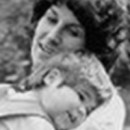
Shirley Nolan
Shirley died July 2002
Shirley Nolan was one of Australia’s most high profile sufferers from Parkinson’s Disease. Shirley took her own life at her home in Adelaide in July 2002.
 Read
Read
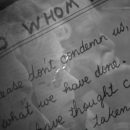
Sidney & Marjorie Croft
November 2002
Sidney & Marjorie Croft died together, rather than risk being separated in death.
 Read
Read
Norma Hall
Norma died 2001
Norma Hall was had bone, lung and liver cancer. Philip Nitschke nursed her during a time where she decided to end her life by refusing food and drink. This was covered by Kerry O’Brien on the 7.30 Report.
 Read
Read
Esther Wild
Esther died 1997
Esther narrowly missed the opportunity to use the Northern Territory’s Rights of the Terminally Ill Act to die. The Kevin Andrews Bill overturned the law and prevented her the right to die with dignity.
 Read
Read
Janet Mills
Janet died 1996
Janet had suffered for 10 years from a rare disease known as Mycosis Fungoides. This is the same disease that the well known British actor, Paul Eddington from the series Yes Minister died from in 1995.
 Read
Read
Bob Dent
Bob died 22 September, 1996
Bob Dent was the first person to use the VE legislation of the Northern Territory and became the first person in the world to die from a legal, voluntary lethal injection.
 Read
Read
Max Bell
Max died April 1996
Max Bell drove his taxi to Darwin in 1996 to use the Rights of the Terminally Ill Act to die. Sixty-seven years old and suffering from stomach cancer, Max’s surgery had left him with constant nausea and vomiting.
 Read
Read